Monday, June 13, 2011

fragmented self


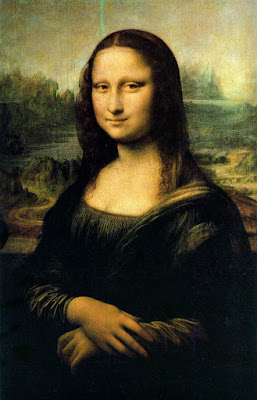
When I first laid eyes on the Mona Lisa in the Louvre in Paris, for example, I was drawn to Leonardo da Vinci's small masterpiece by the famous smile and struck by how the face before me appeared unified and immediately recognizable. Yet I knew that behind that familiar face was an illusion. I thought of Picasso's portrait of Dora Maar, who was the artist's muse, model, and lover. Picasso's fractured perspective creates facial features that have seemingly unnatural relationships and proportions. Most of us find da Vinci's Mona Lisa much closer to the way we normally perceive the world than Dora's disjointed planes. But the brain makes us who we are from a jumble of components that are fragmented and distributed through the cortex and thalamus in a way. that is analogous to the way Picasso sometimes painted.

- Kevin Nelson


Pablo Picasso - Portrait of Dora Maar (1937)


Monday, May 16, 2011

music is about identity, not pleasure

When it comes to improving our purchases of music, we must grapple with the Love of the New. Most people buy only very recent music, rather than mining history for the very best music of the entire past. Niche fans—such as in classical music—tend to focus on recently released or rereleased recordings, even when the composition is old. Like everyone else, they are excited by the new arrivals in the marketplace. Some people really do just want Verdi and Mozart, but this is part of the reason why classical music is well under 5 percent of the market in recorded music releases.

Every now and then rereleases make a big splash. The Beatles' catalog was rereleased circa 1976, and many of the songs were hit singles again. But such successes are the exception and not the rule. Buddy Holly's "Every Day" was one of the most charming songs of the

early 1960s. James Brown's "Bewildered" was some of the most powerful two minutes of music of the twentieth century. Both are accessible and easy to appreciate. Yet there is no push to rerelease either song on a widespread basis to compete for hit status. There are plenty of rereleases, including recordings by these artists, but they are targeted for sale to a relatively small number of aging baby boomers or collectors. No one tries to make these songs major hits again.

Presumably music company executives do not think that either song would bring in much additional money. The profits would not be worth the marketing expenditure.

Most of the music in the United States is bought by people under thirty years of age. I can assure you that most of these people do not already own these songs. Most older music is simply not on their radar screens. But why not? Buddy Holly and James Brown are great. Okay, some of you may be thinking that Tyler is an old fogey. Maybe Buddy Holly and James Brown are, on reflection, totally "lame." That is a matter of taste. But there isn't much music being rereleased—with an aim toward hit status—from 1969 either. Nor from 1970. Nor from 1980. Nor 1990. Get the picture? The phenomenon goes well beyond the possible defects of my favorite older songs. It can't all stink. Buyers want the new. Why? I look to the Me Factor. Music is about identity. It is also about a differential identity. The problem with old music is simple. Somebody else already liked it. Even worse, that somebody else might have been one's parents. Or grandparents. I believe that Grandpa's fanship is less offensive than that of the parents, but it is hardly cause for youthful cheer.

In many cultural markets—most of all in music—many of the buyers seek artistic secession. That means liking something new, or at least liking something that will appear new to one's peers. This secession does not occur every year. If Nirvana reaches peak popularity in 1994, people who start listening to "cool music" in 1995 need not reject Nirvana. Nirvana is associated with the school class one year ahead and of course with slightly older siblings. While youthful feelings toward the slightly older are decidedly mixed, there is a strong element of emulation and some degree of toleration. The two groups simply are not that different. Nirvana can remain cool one year (or more) past their peak popularity.

But as the years accumulate, Nirvana loses acceptable status. For the class of 2004, Nirvana was loved by the twenty-seven-year-old guy just finishing his MBA. Or perhaps they are loved by "the loser pumping gas," or by "the guy who runs the produce department." How cool is that? Suspicions set in. At some point Nirvana is no longer a good means of establishing one's identity. Many current fans of indie rock like Nirvana as an ancillary interest (after all, they did inspire later indie acts, such as The White Stripes), but few stake their identity on the group.

A few hipsters will invest their entire identities in the idea of "retro," such as wearing 1970s bell bottoms or listening to ABBA. But this is best thought of as rebellion against all other time periods, and a new and more radical form of difference, rather than wishing to take on the true vibes of the chosen retro attachment. Few of these people enjoy the TV shows or the cars from that same period, except as an occasional source of amusement.

For those who don't believe that music markets are largely about identity, how is it that musical tastes are so predictable? Take a girl who is twenty years old, grew up in suburban Connecticut, is Jewish, and majors in English at an Ivy League school. What is the chance I hat she is an avid partisan of heavy metal? Very small. Most likely her tastes run in the direction of "indie rock." She might also like classical music, especially if she grew up playing an instrument. She will cringe at the thought of country and western. Regaling her with the glories of Hank Williams, Sr., and early Johnny Cash will hardly make a dent in this armor.

- Tyler Cowen


can art become cliche?

The power of art is often its power to surprise. When many sources such as authors, editors, and advertisers, display an image of a famous artwork, in the process the famous starts to look ordinary. The result: the surprise is used up too quickly and the images bore us rather than astonish or delight us. It is like having too many people tell us the same joke within a week's time. No matter how good the joke, at some point it ceases to be funny and perhaps even becomes annoying.

The importance of context suggests that results of the test of time are difficult to predict in art. An image can appear powerful in 2006 but by 2030 may be trite. The colors of the French impressionists do not appear dissonant or shocking to the modern viewer; they come across as conservative and pretty. After Led Zeppelin, Gene Vincent no longer sounds like such a hard-rocker. The dinosaurs in Steven Spielberg's Jurassic Park were a special-effects revelation at the time and they delighted millions of moviegoers. Today they appear amateurish, as if they came out of an underfunded computer game from Eastern Europe.

Alternatively, other images and other cultural outputs gain in power. The fusion, funk, and general chaos of the late recordings of Miles Davis were a mystery to most jazz critics at the time. They could not understand why he would abandon bop or silky trumpet playing for what sounded like noise. Those recordings are now seen as seminal forerunners of jungle, trance, rap, and ambient music.

- Tyler Cowen


Rossini - William Tell Overture


Franz Liszt - Hungarian Rhapsody #2


inversion of status through co-option?


who said museums are meant to be enjoyable?

Museums do not depend on "customers" or ticket buyers. For a typical art museum, ticket receipts do not cover one-tenth of the cost of their operations. Museums are far more dependent on donors and sometimes on government subsidies. Direct subsidies are a more important source of museum income in Western Europe, not the United States, so let us focus on donors. For most American art museums, donors account for well over half of the yearly budget. The real influence of donors is much stronger, since donors are also the most important source of donated or lent paintings and sculptures. Donors may also volunteer, help museums organize exhibits, or use their contacts to borrow artworks from other museums. After all, most important museum donors are wealthy and influential people. A museum that does not make its donors happy will shrink in importance, relative to museums that are more donor-oriented. The incentive for a museum is to please donors.

Donors do not want exactly what visitors want. Visitors want that the museum be fun and easy to use. Donors are more concerned that the museum confers status upon them in the arenas of high culture, high society, and perhaps high finance. Donors like fancy receptions, which is why museums hold them.

In part, museums care about visitors for indirect reasons, so that then donors do not feel they are supporting an empty house. But the interest of viewers and donors do not in general coincide, and we should not expect the viewers to win out. (Note that zoos, which typically rely more on admissions and less on donations than do museums, tend to be designed for fun.) Consequently not every museum is easy to use. Don’t expect it to be. Get used to that. Work around it. Use mental reaming to make the museum more like institutions that are geared to satisfy us.

- Tyler Cowen


art or not?

We are all supposed to love the Mona Lisa, which is often described at the world's greatest painting, but is it really? Actually, I'm quite sick of it as well as these other "masterpieces."


Sunday, May 15, 2011

art as theory

Our time and attention are scarce. Art is not that important to us, no matter what we might like to believe. So we should stop self deceiving and admit to ourselves that we don't just love "art for art's sake." Our love of art is often quite temporary, dependent upon our moods, and our love of art is subservient to our demand for a positive self-image. How we look at art should account for those imperfections and work around them.

Art has a social role in addition to its aesthetic value. We like art for how it complements our self-images and our relationships with others. Being by nature a lover of theory, I enjoy identifying with the grid-based abstract art of Piet Mondrian more than with Victorian fairy painting. When I was single, I would have been suspicious if a date of mine loved Monet above all other artists. He is a wonderful painter, but I would fear that she would find my tastes—which include Bruce Nauman and Jeff Koons—too strange and that I would find her too mainstream.